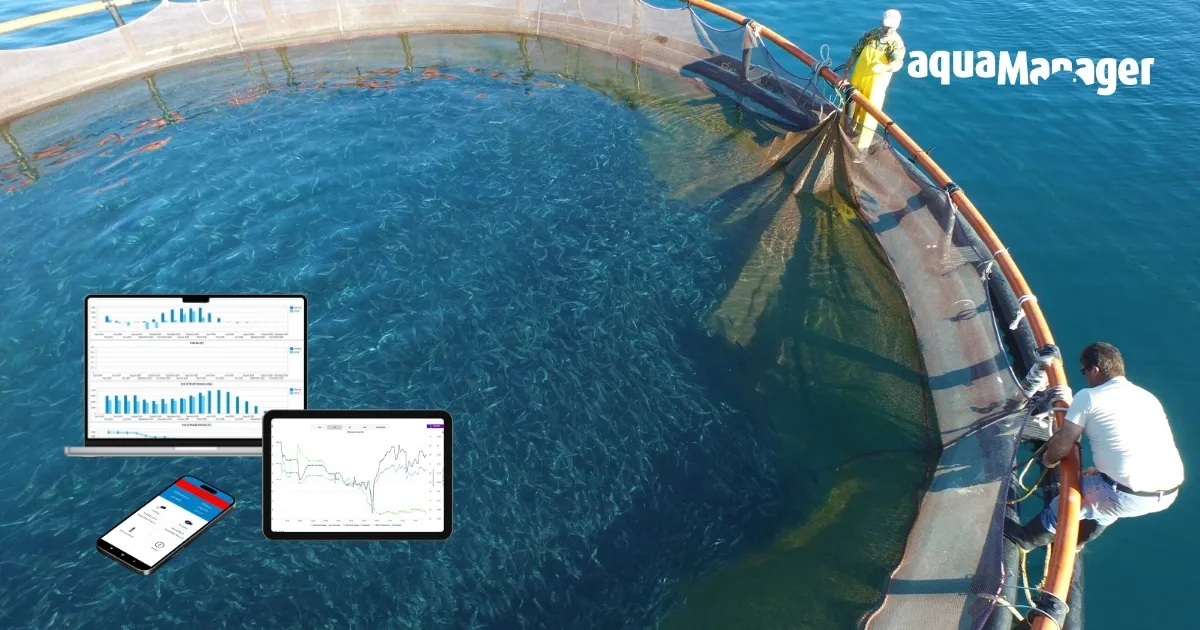
aquaManager empowers fish farms with smart technology to optimize production, reduce waste, and minimize environmental impact. By combining automation, real-time monitoring, and predictive analytics, our solutions help farmers make better decisions that improve efficiency while promoting sustainability.
Optimized Feeding and Reduced Waste
Feed waste is one of the largest contributors to environmental pollution in aquaculture, leading to water contamination and unnecessary resource consumption. Aquamanager helps farms optimize feeding by: Monitoring feed consumption in real time, ensuring fish are fed according to their actual needs. Using AI-driven analytics to predict optimal feeding schedules, improving Feed Conversion Ratios (FCR). Minimizing overfeeding, which reduces excess nutrients entering the water and lowers the environmental impact of farming operations.

Smart Production Planning for Sustainability
Efficient production planning not only enhances profitability but also directly reduces environmental strain. With aquamanager, farms can: Optimize stocking densities and harvest schedules to prevent overcrowding, reducing stress and disease outbreaks. Plan feeding strategies for better FCR, ensuring fish grow efficiently with minimal feed waste. Improve water usage by reducing the frequency of unnecessary water exchanges, preserving natural resources.
Cost Tracking and Sustainable Resource Use
Aquamanager provides detailed insights into the cost per batch and per fish, helping farms make data-driven decisions about resource allocation. While this feature primarily impacts financial sustainability, it also supports environmental sustainability by: Encouraging farms to optimize their production processes, ensuring resources like feed, energy, and water are used efficiently. Highlighting inefficiencies, prompting farms to take corrective actions that reduce waste and environmental impact.

Water Quality Monitoring and Conservation
Water is a critical resource in aquaculture, and poor water quality can lead to disease outbreaks, fish mortality, and environmental damage. Aquamanager integrates with sensors and monitoring devices to: Track key water parameters (oxygen levels, pH, ammonia, etc.) and alert farmers to any changes. Enable proactive water management, reducing the need for reactive treatments that may involve chemicals or antibiotics. Support recirculating aquaculture systems (RAS) by ensuring optimal conditions for water reuse, reducing dependency on freshwater sources.

Energy Efficiency and Carbon Footprint Reduction
Aquaculture operations rely on aeration, pumping, and feeding systems that consume significant energy. Our platform helps farms: Automate aeration and pumping schedules to reduce unnecessary energy consumption. Monitor equipment performance, preventing inefficiencies that waste electricity and increase emissions. Encourage integration with renewable energy sources, such as solar-powered aeration, reducing reliance on fossil fuels.
Traceability and Compliance for Sustainable Practices
Sustainability goes beyond operations—it also involves transparency. Aquamanager helps farms meet environmental and regulatory standards by: Tracking every stage of production, ensuring full traceability from hatchery to harvest. Automating compliance with certification standards (ASC, GlobalG.A.P., etc.), reducing the risk of unsustainable practices. Digitizing records and reducing paper-based processes, minimizing waste.
Health Management and Biodiversity Protection
Disease outbreaks in aquaculture not only harm production but can also threaten wild fish populations. Aquamanager helps prevent and manage health issues by: Providing early detection of disease risk factors, reducing dependency on antibiotics. Encouraging responsible stocking densities, preventing the spread of disease. Improving biosecurity measures, limiting cross-contamination between farmed and wild fish species.
A Smarter, More Sustainable Future for Aquaculture
By integrating automation, real-time monitoring, and data-driven insights, aquamanager is leading the way in responsible fish farming. Our solutions help farms reduce their environmental footprint while improving efficiency, profitability, and sustainability.